

Retainers for Smile Maintenance
Finishing your active orthodontic treatment is an exciting milestone. Your braces are off or you've finished your final set of aligners, and now it's time to focus on maintaining your new smile.
The next stage of your orthodontic care involves wearing a retainer to help keep your teeth in their planned positions.
Retainers are custom-made to fit your teeth and are typically worn according to a schedule provided by your orthodontist. Depending on your individual needs, different types of retainers may be recommended after treatment with braces or clear aligners.
Following your recommended retainer wear schedule is an important part of maintaining your orthodontic treatment results and helping your teeth remain in their planned positions over time.
Flexible Payment Plans
At Viva Orthodontics, we believe cost shouldn’t stand in the way of orthodontic care. We offer 0% financing and flexible payment options to help make treatment more manageable.
Why You Need a Retainer
After active orthodontic treatment is complete, retainers help stabilize your teeth and reduce unwanted shifting.
During treatment, braces or clear aligners gradually move your teeth and their roots into their planned positions. As the roots move, the surrounding bone needs time to adapt to these changes and stabilize around them.
This process continues after your active orthodontic treatment has ended.
Preserving Your Results
Wearing a retainer helps stabilize your teeth while this happens, giving the surrounding jawbone the time it needs to reform and harden around the roots.
This prevents the teeth from shifting back to their original positions and undoing all of your months or years of orthodontic treatment.
Retainer FAQs
Learn some retainer basics by reading these frequently asked questions from our patients.
-
How do I clean my retainer?
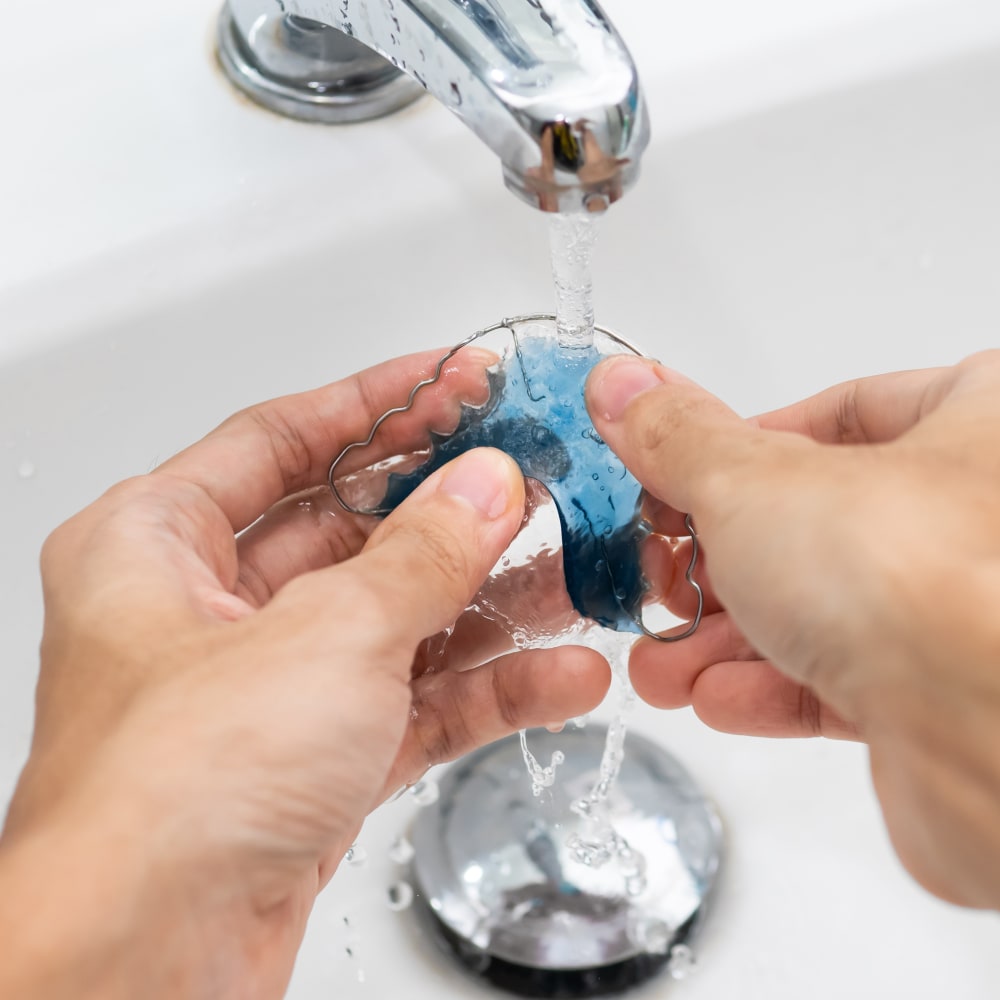
Clean your retainer at least once a day using a soft-bristled toothbrush and mild, unscented liquid soap to remove food debris, plaque and bacteria. Rinse it thoroughly with cool or lukewarm water, as hot water can affect the shape of your retainer.
You can also soak your retainer as needed using orthodontic appliance cleaning tablets to help loosen stubborn buildup and keep it fresh. These cleaners can supplement, but should not replace, regular brushing.
-
How long does it take to get used to wearing a retainer?
It may take a little time to get used to wearing your retainer, particularly if it affects your speech at first. Practicing speaking, reading or singing aloud can help you adjust more quickly.
-
How should I wear and care for my retainer?
- Wear your retainer as directed by your orthodontist.
- Remove your retainer when eating or swimming.
- Store your retainer in its case whenever you're not wearing it.
- Keep your retainer away from heat, including hot water and hot vehicles.
- Avoid storing it loose in pockets, bags or napkins where it could be lost or damaged.
- Keep your retainer out of reach of pets.
- Bring your retainer to your orthodontic appointments so we can check its fit and condition.
-
What should I do if my retainer is lost, damaged or doesn't fit properly?
If your retainer is lost, damaged, uncomfortable or no longer fits properly, contact our office for guidance. Do not attempt to adjust or repair your retainer yourself, as this could cause further damage or affect how it fits.
-
How often do I have to wear my retainer?
For the first few months of retainer wear after active orthodontic treatment, your orthodontist will instruct you to wear your retainer 24 hours a day, every day. This is because these early months of the retention phase are when your teeth are most likely to relapse (shift back to their pre-treatment positions).
During this time, you'll take your retainer out only to eat, brush and floss your teeth, or play sports (when you'll need to wear a sports mouth guard instead).
Over time, your teeth will settle into their new positions, and your risk of relapse will decrease. When your orthodontist has determined you're ready, you'll be able to start wearing your retainer for fewer hours a day. For many people, this means overnight retainer wear only.
-
How often should I replace my retainer?
With proper care and correct use, most retainers can last for years.
The following signs indicate that a new retainer might be in order:
Cracks or Chips
When you start noticing chips or cracks in your retainer, it's time to replace it. This type of damage will only get worse over time, and it will also compromise the structural integrity of the retainer, making it less effective.
Poor Fit
Retainers are designed to be sturdy and durable, but they may start to loosen over time with wear. It's important to replace your retainer if you notice that the fit is loose, because at that point, it is no longer effectively supporting your teeth.
Excessive Buildup
You should be cleaning your retainer regularly to keep it in good shape. However, even if you're doing this, stubborn buildup can occur over time. If your retainer has buildup that can't be removed with a thorough cleaning, it should be replaced.
-
Can I eat or drink while wearing my retainer?
You should always take your retainer out when eating, and you should also take it out if you're drinking hot liquids, or highly pigmented ones, to prevent the retainer from getting warped or stained, respectively.
You can drink water while your retainer is in, however.
-
How do I store my retainer?
When you're not wearing or cleaning your retainer, it's important to store it somewhere safe so it doesn't get lost or damaged. We recommend storing your retainer in the case it comes in any time it's not in your mouth.
Always remember to clean and dry your retainer and its carrying case thoroughly first, to prevent bacteria from forming.
-
What happens if I forget to put my retainer in?
It's important to wear your retainer as prescribed by your orthodontist to ensure that your orthodontic treatment results are maintained.
That said, if you occasionally forget to wear your retainer for short periods of time, you probably have nothing to worry about. Just go back to wearing it consistently as soon as you remember.
Keep in mind that if you don't wear your retainer consistently, there's a chance your teeth could shift out of position, and you'll require more corrective orthodontic treatment to realign them. To avoid this, prioritize wearing your retainer as prescribed.