

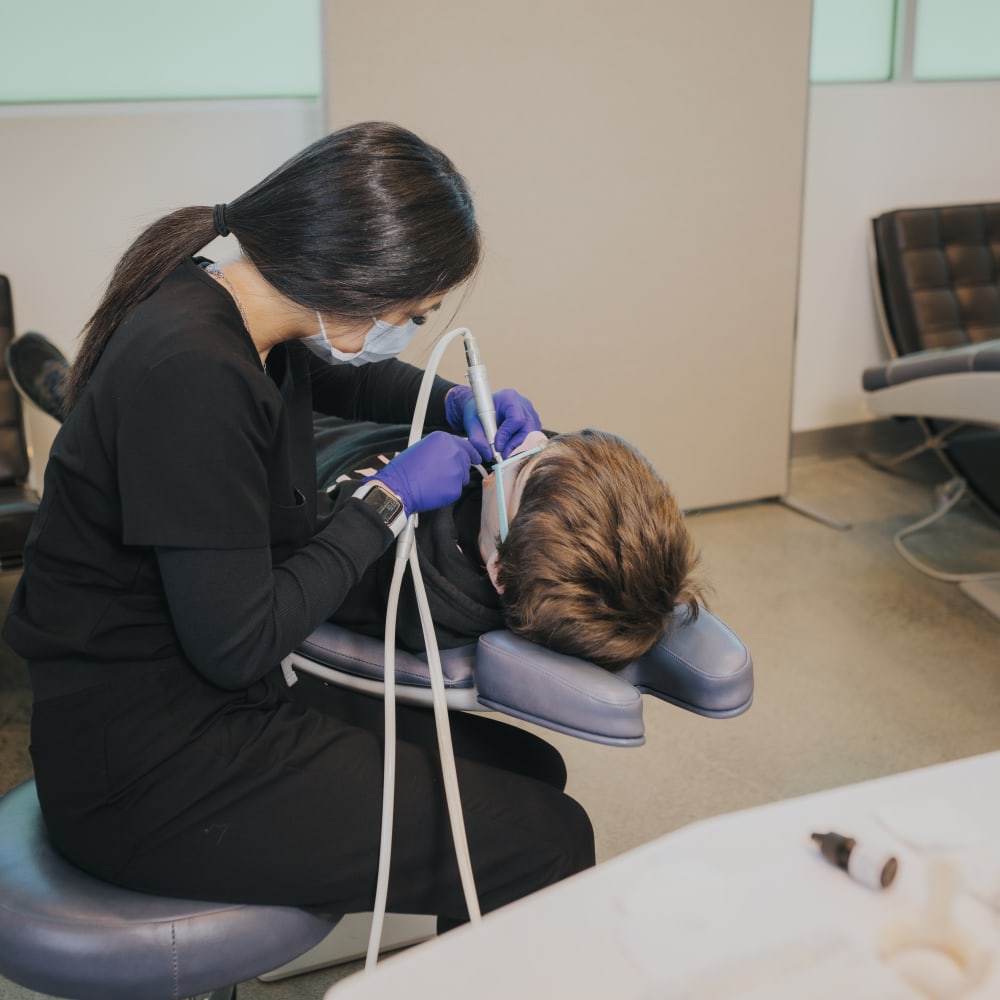
An Individualized Approach to Children's Orthodontic Care
Around age seven is a good time for a child's first orthodontic evaluation. At this stage, a mix of baby and permanent teeth allows the orthodontist to assess how the teeth and jaws are developing and identify concerns that may benefit from monitoring or treatment.
Our orthodontists take an individualized approach to children's orthodontic care and do not recommend early treatment unless there is a clinical benefit to starting while a child is still growing. For many children, the appropriate approach is simply to monitor their development until they are ready for treatment later.
When early treatment is recommended, Phase 1 orthodontics can address certain developing concerns involving the teeth, bite, jaws or airway. Depending on your child's needs, treatment may include palatal expanders, Invisalign First or braces.
A second phase of treatment may then be recommended once more of the permanent teeth have erupted.
Initial Consultations for Children
If you or your general dentist have concerns about your child's orthodontic health, an assessment by an orthodontist may be in order. Bring your child in to Viva Orthodontics for a complimentary initial orthodontic evaluation.
Phase 1 orthodontic treatment may be recommended for children who have certain developing bite, alignment, jaw or airway concerns that could benefit from treatment while they are still growing.
Phase 1 can include a variety of orthodontic treatments. The most common are palatal expansion, braces, Invisalign First, and treatment for airway issues.
When appropriate, Phase 1 treatment may include palatal expansion, braces, Invisalign First, and treatment for airway issues. The specific approach and timing will depend on your child's individual orthodontic needs.
Phase 1 also includes:
- Planning for the next phase
Phase 1 treatment is essentially preparation for Phase 2. Early orthodontic treatment plans are designed to minimize the need for invasive or extensive treatment during Phase 2, such as the removal of permanent teeth or surgical procedures to realign the jaw.
- Records to inform treatment
During your child's Phase 1 treatment, we'll keep copious records for reference in Phase 2. These records will note things like the type of appliances used, the duration of treatment time, and the frequency of visits. Records also include models of the teeth, X-rays, and photographs.
- A resting period
Following the completion of your child's first phase of orthodontic treatment, the permanent teeth are left to finish erupting undisturbed.
Retaining devices may not be recommended if they would interfere with eruption. It is best to allow the existing permanent teeth some freedom of movement.
A successful first phase will have created room for permanent teeth to find an eruption path.
- Monitoring tooth progress
At the end of the first phase of treatment, teeth are not in their final positions. This will be accomplished during your child's Phase 2 orthodontic treatment.
Selective removal of certain primary (baby) teeth may enhance eruption during this resting phase. Therefore, periodic recall appointments for observation are necessary, usually every six months.

Phase 2 begins after Phase 1, once most or all of your child's permanent teeth have erupted. This phase focuses on making the remaining adjustments to the position of the teeth and bite, typically using braces or clear aligners.
Phase 2 orthodontic treatment is typically more moderate than regular orthodontic treatment would be if Phase 1 was skipped over.
We think of it as fine-tuning your teen's smile after all the groundwork was laid in Phase 1 – it's the finishing touch. Phase 2 treatment is also typically shorter than Phase 1 (six to 12 months).
- Continuing on the path to a healthy smile
The goal of the second phase is to ensure that each tooth is positioned in harmony with the lips, cheeks, tongue, and other teeth.
- Phase 2 braces or aligner treatment
- Maintenance and retainers
Once Phase 2 treatment comes to a close, retainers will be created for your child. These will be worn on an ongoing basis to ensure that treatment results are maintained long-term.

-
Phase 1 (Ages 5 - 11)
Phase 1 orthodontic treatment may be recommended for children who have certain developing bite, alignment, jaw or airway concerns that could benefit from treatment while they are still growing.
Phase 1 can include a variety of orthodontic treatments. The most common are palatal expansion, braces, Invisalign First, and treatment for airway issues.
When appropriate, Phase 1 treatment may include palatal expansion, braces, Invisalign First, and treatment for airway issues. The specific approach and timing will depend on your child's individual orthodontic needs.
Phase 1 also includes:
- Planning for the next phase
Phase 1 treatment is essentially preparation for Phase 2. Early orthodontic treatment plans are designed to minimize the need for invasive or extensive treatment during Phase 2, such as the removal of permanent teeth or surgical procedures to realign the jaw.
- Records to inform treatment
During your child's Phase 1 treatment, we'll keep copious records for reference in Phase 2. These records will note things like the type of appliances used, the duration of treatment time, and the frequency of visits. Records also include models of the teeth, X-rays, and photographs.
- A resting period
Following the completion of your child's first phase of orthodontic treatment, the permanent teeth are left to finish erupting undisturbed.
Retaining devices may not be recommended if they would interfere with eruption. It is best to allow the existing permanent teeth some freedom of movement.
A successful first phase will have created room for permanent teeth to find an eruption path.
- Monitoring tooth progress
At the end of the first phase of treatment, teeth are not in their final positions. This will be accomplished during your child's Phase 2 orthodontic treatment.
Selective removal of certain primary (baby) teeth may enhance eruption during this resting phase. Therefore, periodic recall appointments for observation are necessary, usually every six months.
- Planning for the next phase
-
Phase 2 (Ages 12 - 18)
Phase 2 begins after Phase 1, once most or all of your child's permanent teeth have erupted. This phase focuses on making the remaining adjustments to the position of the teeth and bite, typically using braces or clear aligners.
Phase 2 orthodontic treatment is typically more moderate than regular orthodontic treatment would be if Phase 1 was skipped over.
We think of it as fine-tuning your teen's smile after all the groundwork was laid in Phase 1 – it's the finishing touch. Phase 2 treatment is also typically shorter than Phase 1 (six to 12 months).
- Continuing on the path to a healthy smile
The goal of the second phase is to ensure that each tooth is positioned in harmony with the lips, cheeks, tongue, and other teeth.
- Phase 2 braces or aligner treatment
- Maintenance and retainers
Once Phase 2 treatment comes to a close, retainers will be created for your child. These will be worn on an ongoing basis to ensure that treatment results are maintained long-term.
- Continuing on the path to a healthy smile
Early Orthodontic Treatments for Kids
These are a few of the most common orthodontic treatment options for kids at Viva Orthodontics.
Braces for Children
At Viva Orthodontics, we use braces to guide the development of children's teeth and jaws for healthier, straighter smiles.
Invisalign First for Children
Invisalign First is Invisalign just for kids! This system of clear aligners works with your child's developing smile to straighten teeth and correct jaw misalignments.
Palatal Expanders for Children
Learn about palatal expansion and its benefits in correcting narrow arches in children.